Why build this?
The business side: who has this problem today, who would pay for a tool like this, and what happens if nobody builds it.
Blog · September 2026
I travelled to Bulgaria as a BUas University Ambassador for a university fair in three cities, and in Sofia I was asked to lead an AI workshop for prospective students.
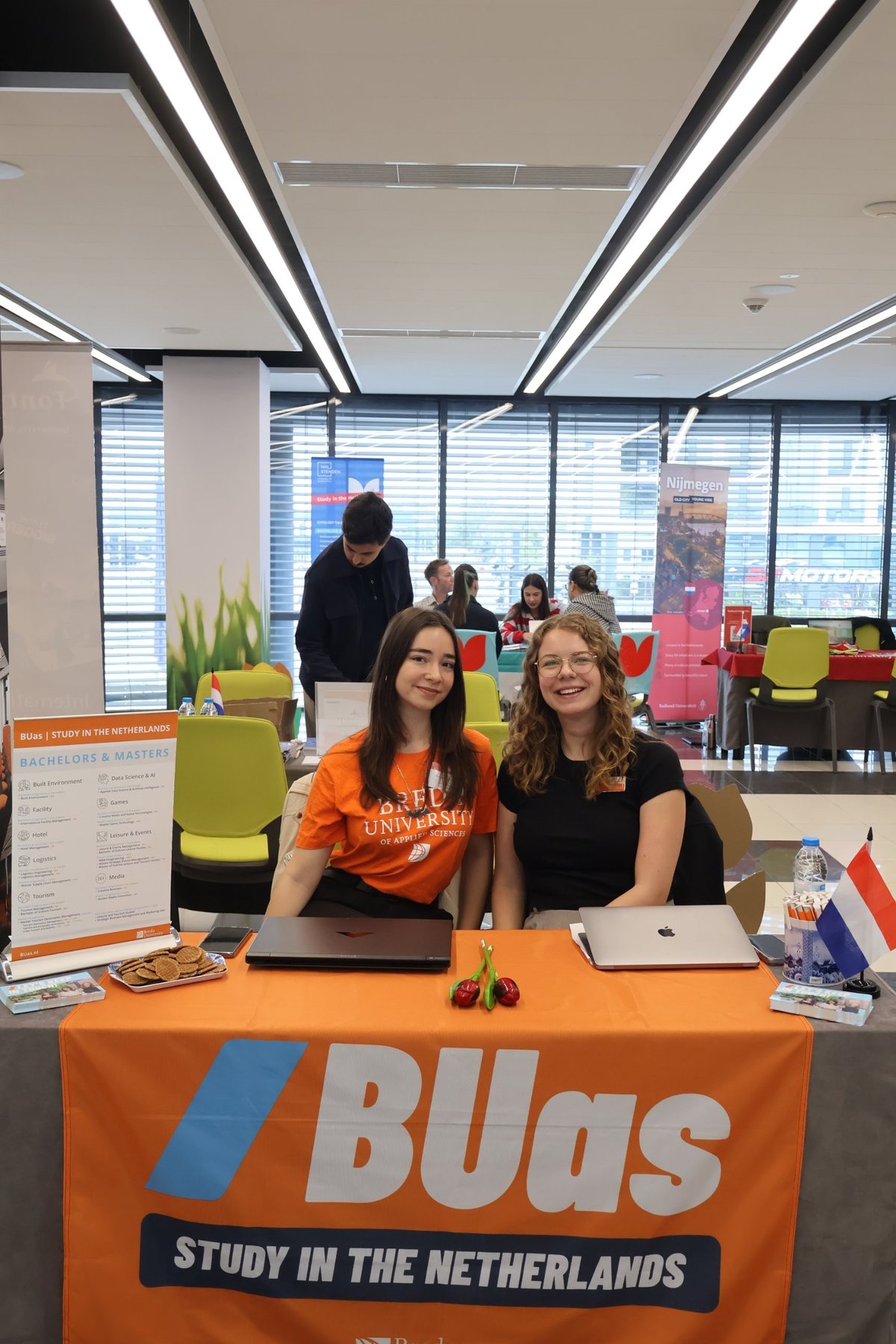
UNI EXPO, the Festival of the Future, is a university fair that travelled across Bulgaria. From 25 to 28 September 2026 I joined it as a BUas University Ambassador in three cities: Sofia, Plovdiv and Varna.
At the BUas stand, next to other Dutch universities, my job was to talk with prospective students about studying in the Netherlands and about my own experience of the programme.
In Sofia I was also asked to do something more ambitious than answering questions: to lead an AI workshop.
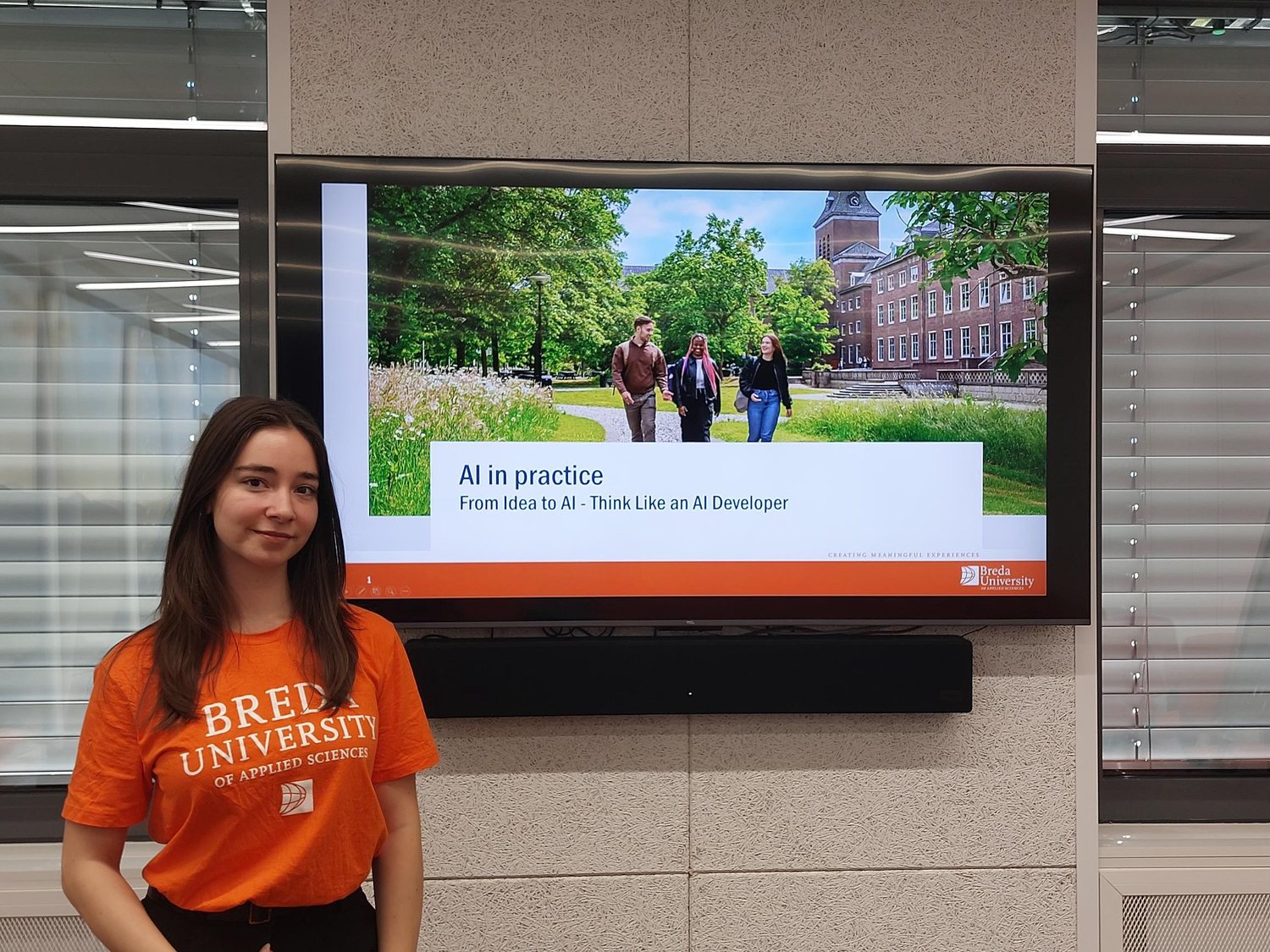
The workshop was called AI in Practice: From Idea to AI, Think Like an AI Developer, and it took place on Saturday 26 September at the Inter Expo Center in Sofia. I did not want to lecture about AI. I wanted prospective students to feel what an AI project is like from the inside.
So I walked them through one of my own first-year computer vision projects, an eyewear recommender that suggests glasses based on face shape (you can read about it on the project page), and then handed the thinking over to them. Each student received a card with one of four projects and worked in a group, answering my questions phase by phase.
The workshop followed the order of a real project, with one question at each phase.
The business side: who has this problem today, who would pay for a tool like this, and what happens if nobody builds it.
Defining the classes, such as round, square and heart for the eyewear project, and discovering that categories blur: is it round, or oval?
The ethics: who might the tool treat unfairly, who pays when it is wrong, and how can we see what the model actually looked at?
The human side and the interface: who opens the tool every day, whether it gives one answer or a few, and how to make it interactive and easy to use.
Each project card hid a different kind of bias, so every group had to find its own.
On my own project, people agreed on a face shape only 50.4% of the time, and my best model reached 43.9%. When the labels are fuzzy, that is the ceiling, which is why phase two asks each group to decide where one class ends and the next begins.
I aimed for a very intuitive way of communicating, closer to a conversation than a talk. The students were encouraged to work together and answer my questions, and the response was wonderful: there were many questions and a lot of engagement, both during the workshop and after it.
Most of the workshops at the fair were led by professors, so I was one of the few students to lead one. It made me feel closer to the students in the room.
I wanted prospective students to see that our work does not only cover code. At BUas an AI project means the whole product, from the first idea to something people can actually use: the business case, the data, the ethics and the design.
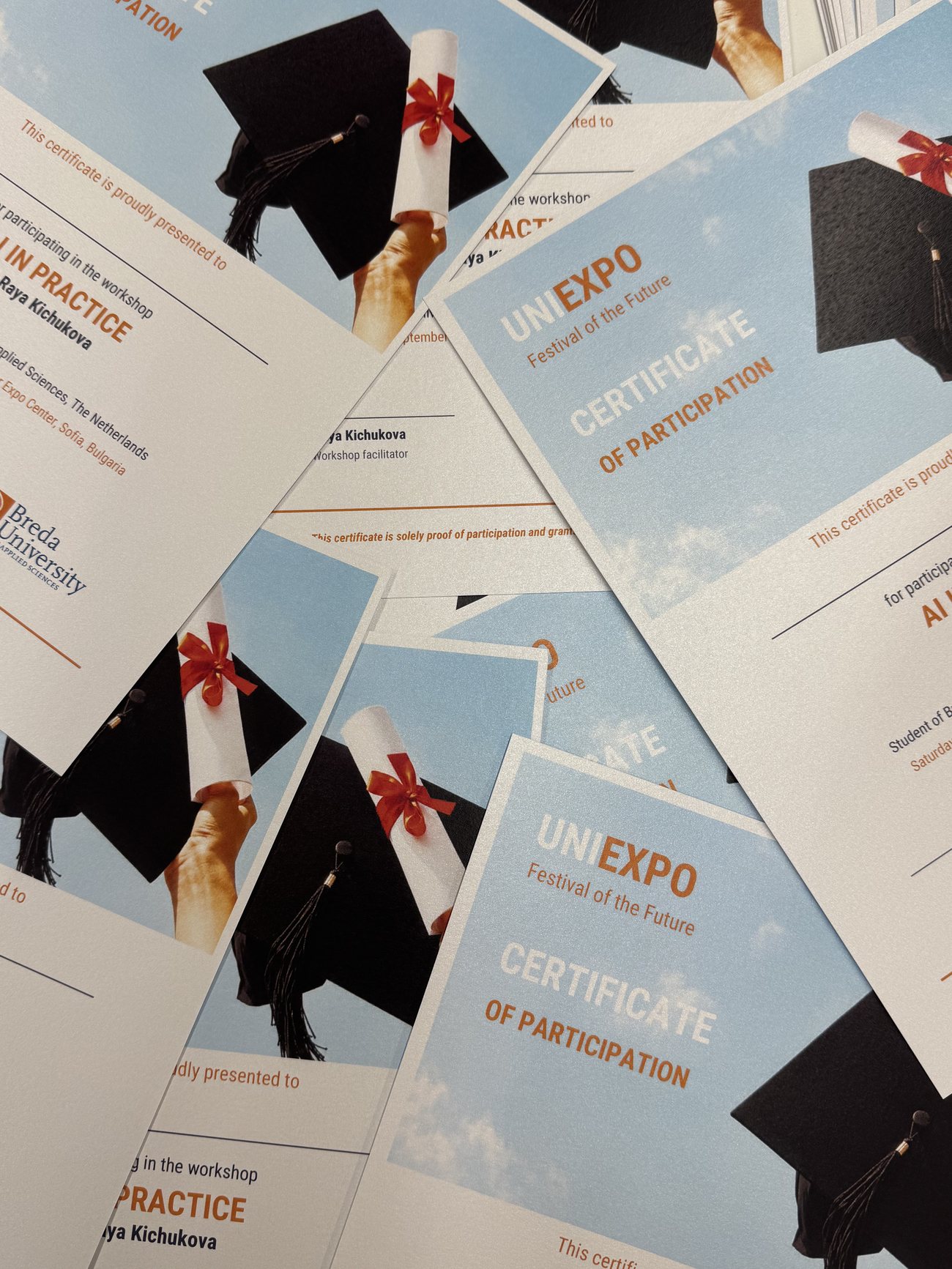
We closed the session with certificates of participation. Every participant left with one for the workshop, a small keepsake of the session in which they thought like an AI developer, from a first idea all the way to a user interface.
It was a wonderful experience, and I enjoyed it a lot.
I'm open to internships in data science, machine learning and data engineering for February 2027. Email is the quickest way to reach me.